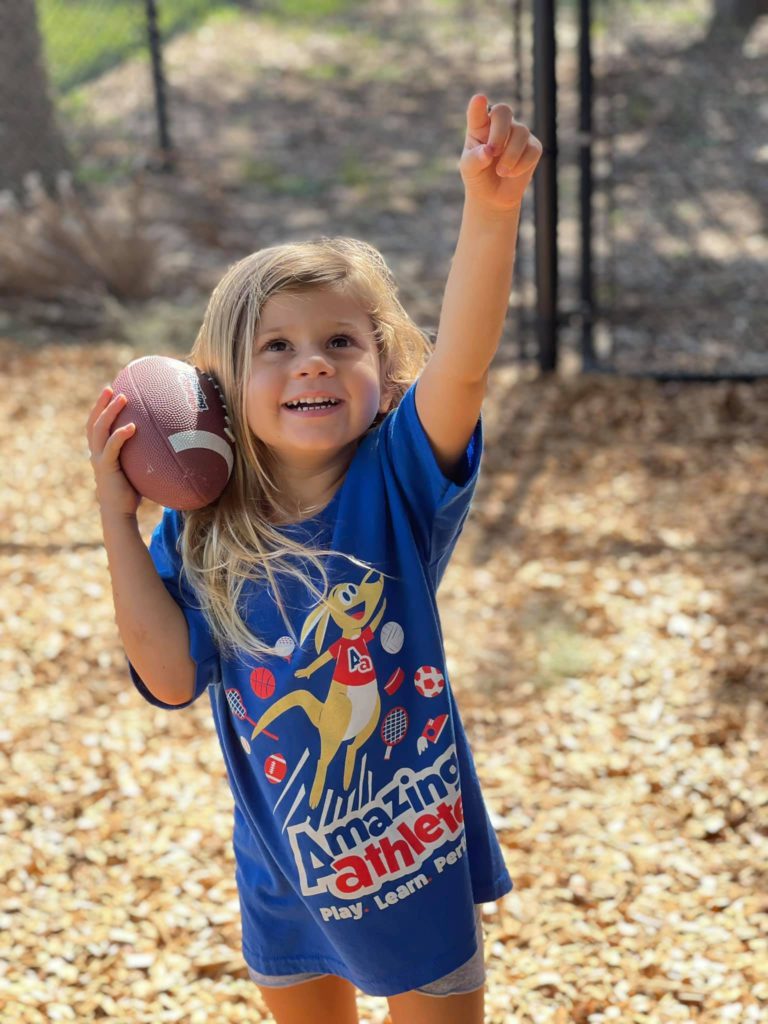
How Outdoor Play Helps Children Practice Sports Skills Outside of Class
Your child doesn’t need a formal practice session every time they want to work on sports skills. A trip to the park, a game in the backyard, or a simple obstacle course can give them plenty of chances to run, jump, balance, throw, catch, and kick.
For parents searching for “outdoor activities for my child,” the idea isn’t to turn home into another sports class. Outdoor play gives children room to move around, try things out, and enjoy being active without worrying about getting every movement right.
At Amazing Athletes Huron Valley, sports are about more than learning the rules of a particular game. Our approach combines exposure to multiple sports with motor development, confidence, teamwork, patience and active wellness in a fun, non-competitive setting.
Why Outdoor Play Supports Sports Development
Young children are still figuring out how their bodies move. Outdoor play gives them plenty of chances to repeat basic movements while they learn what feels comfortable and what takes a little more practice.
Structured sports instruction adds guidance and introduces children to different sports in an age-appropriate way. The two can work well together. A child might practise kicking during a class and then spend the weekend kicking a ball around the park simply because they enjoy it.
For parents, that’s a useful balance. Sports learning doesn’t have to stop when class ends.
Running and Changing Direction
Running is part of many sports, including soccer, basketball, football, and track and field. For young children, it’s also a straightforward way to practise controlling their bodies while moving.
Turn Running Into a Game
Parents can set up short races, chase games or simple movement paths using safe markers. Ask your child to run to a spot, turn around, and come back.
Changing direction adds another challenge. Children have to slow down, stop, turn, and get moving again. Keep it simple and skip the scorekeeping. The point is to help them feel comfortable moving around while having a good time.
Jumping and Landing
Jumping gives children a chance to work on balance, coordination, and body control. You don’t need special equipment, either.
Try These Jumping Activities
- Jump over chalk lines.
- Hop between marked spots.
- Jump forward and practise landing with control.
- Pretend there’s a river to jump across.
- Add a few jumping stations to an obstacle course.
Keep the focus on trying rather than seeing how high or far your child can jump. Some attempts will be awkward. That’s part of learning.
Throwing and Catching
Throwing and catching show up in plenty of sports. A soft ball is enough to get started, and a parent or sibling can join in.
Start With Easy Ball Games
Begin by rolling the ball or making gentle tosses. Once your child gets more comfortable, increase the distance or give them a large target to aim for.
There’s quite a bit going on when a child catches a ball. They have to watch it, work out where it’s going, move their body into position, and react at the right time.
Our core program introduces children ages 2½-6 to the fundamentals of 10 sports while helping them develop key motor skills in a non-competitive setting.
Kicking and Foot-Eye Coordination
Kicking gives children another way to practise balance and coordination, especially through movements commonly used in soccer.
Create a Simple Target
Place a safe target on the ground and let your child kick a ball toward it. You can also pass the ball gently back and forth.
Don’t worry too much about whether every kick lands exactly where you wanted it to. Let your child try kicking harder, softer, or from a different position. That experimentation is part of becoming more comfortable with the ball.
Balance and Body Control
Balance comes into play whenever children need to slow down, hold a position, or move carefully. Outdoor games are an easy way to practise all three.
Build a Simple Obstacle Course
An outdoor obstacle course could include:
- Walking along a chalk line
- Stepping over safe markers
- Hopping between spots
- Moving around an obstacle
- Throwing or kicking a ball toward a target
You can change the course whenever your child gets bored with it. Maybe one day they have to hop between spots, and the next day they have to carry a ball through part of the course. Small changes keep the activity interesting.
We incorporate structured movement around developmental milestones, and key motor skills, giving children a foundation they can keep practising during outdoor play.
Listening, Timing, and Following Directions
Sports skills aren’t only about movement. Children also need to learn how to listen, wait for a direction, and change what they’re doing when the situation changes.
Make Directions Part of the Game
Parents can call out simple instructions such as “run,” “stop,” “jump,” or “freeze.” Once your child understands the game, put a few movements together.
For example, ask your child to run to a marker, jump twice, turn around, and walk back.
It sounds simple, but children have to remember what they heard and decide what their body needs to do next. That makes the game a little more challenging without making it feel like a lesson.
Teamwork and Taking Turns
Outdoor play can help with social skills too. Playing catch with a sibling, passing a ball with a parent, or working through an obstacle course together gives children chances to cooperate.
Focus on Participation, Not Winning
Not every game needs a winner. Encourage children to take turns, wait for each other, and help when someone gets stuck.
This can be especially helpful for children who are shy or unsure about joining group activities. Getting used to playing alongside others can make new sports settings feel less intimidating.
Our approach emphasizes teamwork, patience, self-control, and self-confidence through a nurturing, learning-based environment rather than focusing on winning or tryouts.
What Makes Amazing Athletes Different?
Outdoor play gives children plenty of freedom to move, but structured instruction can give them regular guidance and introduce them to sports they might not otherwise try.
Multi-Sport Discovery
One key part of our approach is introducing children to multiple sports rather than asking them to settle on one too early.
The curriculum introduces sports including soccer, football, baseball, basketball, tennis, volleyball, lacrosse, hockey, golf, and track and field.
That’s a lot of variety for a young child. It gives them opportunities to try different types of movement and find activities they actually enjoy before moving toward a single-sport pathway.
Development Before Competition
For young children, sports don’t have to revolve around performance. Our approach focuses on development, confidence, and positive participation in a non-competitive environment.
That can be useful for parents who want their child to become comfortable with movement, and group activities before entering a more competitive sports setting.
At Amazing Athletes Huron Valley, children can explore different sports while developing foundational motor skills, confidence, teamwork and a positive relationship with physical activity.
How Parents Can Extend Sports Learning Outdoors
For families considering “outdoor activities for my child,” there’s no need to recreate a professional practice session at home.
If your child likes kicking, take a ball to the park. If throwing and catching gets them excited, bring a soft ball outside. If they love obstacle courses, make a simple one with safe objects you already have.
Follow their interests. That’s usually what keeps them coming back to the activity.
Keep Movement Fun and Pressure-Free
Children don’t need perfect technique when they’re playing outside. Give them room to try something, get it wrong, and have another go.
Running, jumping, balancing, throwing, catching, and kicking can all help children build foundational movement skills. Structured multi-sport enrichment adds guidance and variety, while outdoor play gives children plenty of freedom to practise in their own way.
Conclusion
Outdoor play can be a simple part of a child’s physical development. A game at the park or in the backyard can give children a chance to practise movement and social skills without making exercise feel like another lesson.
For parents considering “outdoor activities for my child,” combining free play with structured sports enrichment can offer a good balance of independence and guidance.
At Amazing Athletes Huron Valley, children get opportunities to try different sports in a supportive, non-competitive environment while building foundational skills and confidence along the way.