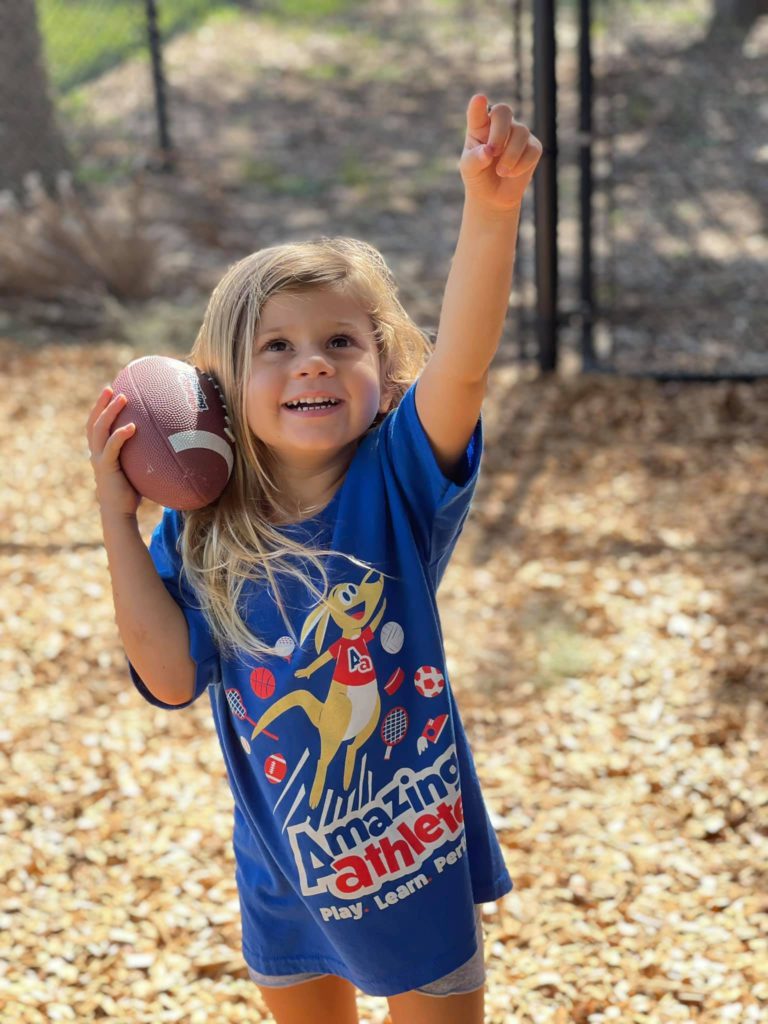
Beyond Burning Energy: 6 Motor Skills Preschoolers Practice Through Sports and Movement
A preschooler chases a ball across the playground, misses a kick, turns around, and tries again. A few minutes later, the same child is hopping between floor markers or racing a friend to the fence. It looks like ordinary play. And it is. But those little movements give children practice with balance, coordination, and body control.
Between ages 2½ and 6, children are learning how to move with more control. Running, jumping, throwing, catching, and kicking all take practice. So does balancing on one foot without immediately stepping down.
The good news? Practice doesn’t have to feel like a lesson. Simple motor skills activities for preschoolers can fit into a backyard game, a playground visit, or a short sports class. Children get to move, make mistakes and try again without worrying about getting every movement right.
Why Motor Skills Matter Before Kindergarten
Gross motor skills involve large muscle groups used for activities such as running, jumping, and balancing. Fine motor skills involve smaller movements, including holding a pencil or picking up a small object.
Sports and movement games give children regular chances to work on gross motor skills. An obstacle course, for example, asks a child to step over an object, change direction, and judge how much space is available. A simple ball game involves watching the ball and moving at the right moment.
Some attempts won’t go as planned. A child might throw too hard or lose balance while jumping. That’s normal. Give the child another try, make the task a little easier if needed and let practice do its work.
1. Balancing: Learning to Stay Steady
Balance comes into play when children walk along a curb, climb playground steps, or turn quickly during a game. It helps the body stay steady while moving, or standing still.
Try these activities at home or in the yard
- Walk along a line made with floor tape.
- Step between flat markers placed on the ground.
- Stand on one foot for a few seconds with an adult nearby.
- Walk through a simple obstacle course with gentle turns.
Start with the easiest version. There’s no need to make a balance game difficult to make it useful. Keep the surface level, leave plenty of room and offer a hand when a child needs support.
2. Running: Learning When to Speed Up and Stop
Running seems simple until a child has to stop before reaching another person or change direction without falling. Preschoolers are still working on controlling speed and coordinating arm and leg movements.
Try a few short games-
- Run to a finish line marked with cones.
- Follow a leader who changes direction.
- Move between two markers, then return to the starting point.
- Start and stop when a coach calls out a signal.
Keep the space clear and the rounds short. A child who gets distracted halfway through a race can still benefit from another turn. The point is to practice moving with control, not to see who finishes first.
3. Jumping: Getting Off the Ground and Landing Safely
Jumping asks children to bend their knees, push off the ground, and land without losing balance. Some children take to it quickly. Others prefer to start with a tiny hop.
Both are fine.
Try these activities:
- Jump forward over a line.
- Hop between flat floor markers.
- Pretend to be a frog jumping across the grass.
- Practice small two-foot jumps on a level surface.
Pay attention to the landing. Children don’t need to jump high or cover a long distance. Small, controlled movements are a good place to start and a few repetitions are often enough before switching games.
4. Throwing: Aiming at a Target
Throwing a ball into a basket takes more coordination than it might seem. Children must look at the target, move the arm and judge how much force to use.
Set up a simple game with soft equipment:
- Toss a soft ball into a large laundry basket.
- Throw beanbags toward flat floor targets.
- Roll a ball toward lightweight pins.
- Take turns throwing to a partner from a short distance.
Use a nearby target first. Move it farther away only when the child feels ready. Missing is part of the game, and children can learn to adjust the next throw without turning the activity into a test.
5. Catching: Watching the Ball and Moving in Time
Catching involves watching an object, judging where it will go, and moving the hands at the right moment. For young children, that can be tricky. A fast-moving ball may be too much at first.
Start slowly:
- Catch a soft scarf as it floats down.
- Use a large, lightweight ball that can be held against the body.
- Roll a ball back and forth before trying gentle tosses.
- Stand close together for short catching practice with an adult.
A scarf is a good starting point because it moves slowly through the air. Once a child is comfortable with that, try a soft ball. Keep the distance short and increase it gradually.
6. Kicking: Finding the Ball With Your Feet
Kicking asks children to watch the ball, approach it, balance on one foot, and swing the other leg. It’s a useful movement for beginner soccer, and many playground games.
Try these activities:
- Kick a soft ball between two cones.
- Pass a ball back and forth with a partner.
- Dribble slowly toward a large target.
- Kick a stationary ball into a small goal.
Give children enough space to move without running into each other. Start with a stationary ball, since a moving target adds another challenge. Focus on making contact and aiming, not kicking as hard as possible.
How to Keep Movement Practice Fun
Children develop at different rates. One preschooler might love running and jumping, while another would rather roll a ball back and forth. Both can take part in movement games, with adjustments when needed.
Good motor skills activities for preschoolers leave room for different abilities and confidence levels. A few small changes can make a game easier to enjoy.
Keep each activity short. Show children what to do before asking them to try it. Praise effort when a child has another go after missing a catch or losing balance. And repeat favorite games. Children don’t need a brand-new activity every time they play.
Skip comparisons between children. A preschool sports class should give each child a chance to practice, not create pressure to perform. Honestly, a simple game that children want to play again is often more useful than a complicated activity that loses their attention after two minutes.
Finding Sports Classes in Huron Valley
Play at home and in the park gives children plenty of chances to move. A structured sports class adds a coach, a planned activity, and opportunities to try different sports.
The Amazing Athletes core program serves children ages 2½ to 6 and introduces the fundamentals of 10 sports. The curriculum includes six key motor skills: balancing, running, jumping, throwing, catching, and kicking. Classes also cover physical literacy, nutrition, muscle identification, and social skills in a noncompetitive setting.
At Amazing Athletes Huron Valley, we give families a way to explore age-appropriate sports activities through guided learning and play. Visit the Huron Valley website to learn about local programs and enrollment options.
Families can also check the camps and classes page for current program information or visit the summer sports camp page to learn about additional opportunities for active play.
Conclusion
A child doesn’t need to master a movement in one afternoon. Balance improves with practice, catching takes repetition, and kicking gets easier as children learn how to position the body. Small attempts count.
The best motor skills activities for preschoolers feel like play rather than drills. Keep the games simple, offer encouragement, and let children work at a pace that suits them. With regular opportunities to move, preschoolers can build skills that support playground play and future sports participation.