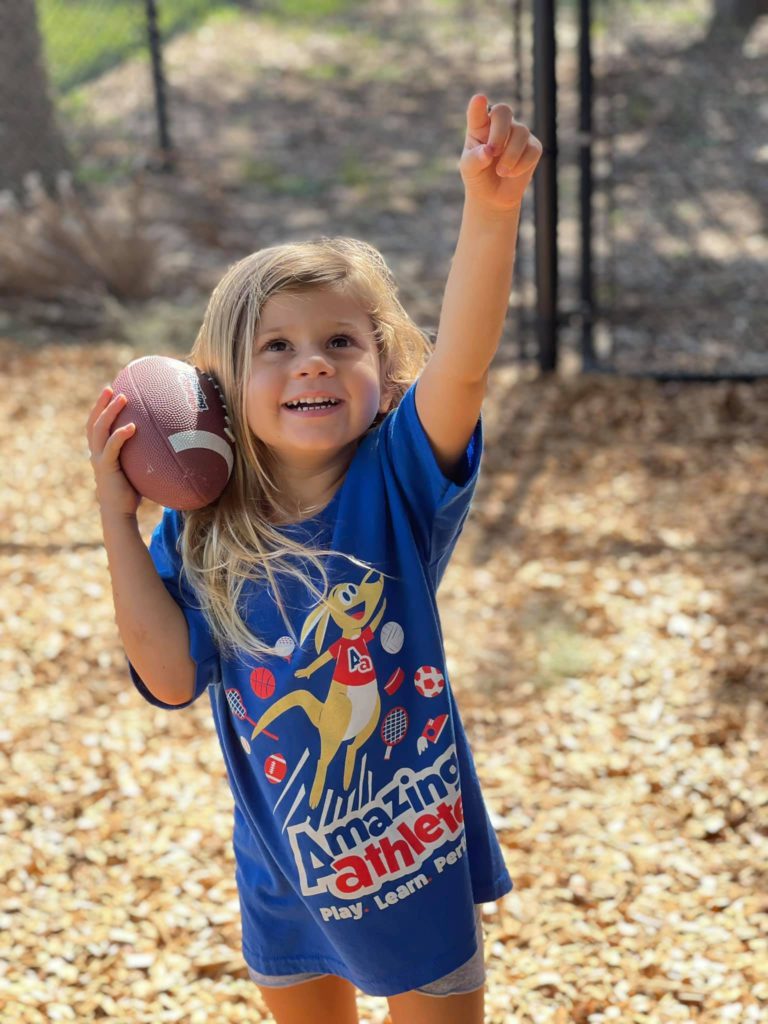
How Non-Competitive Sports Help Shy Preschoolers Build Confidence
A child might spend an entire afternoon kicking a ball around the backyard, then freeze up when asked to join a group game. A new coach, unfamiliar faces, and the thought of getting something wrong can make a simple activity feel like a big deal.
Parents often wonder how to help. Pushing a child into the middle of a game usually isn’t the answer. Some preschoolers need a little time to watch, figure out what’s happening, and decide when they’re ready to join in. Non-competitive sports for young children can offer a supportive setting where a child gets space to adjust, and small opportunities to try something new.
Why Do Some Preschoolers Feel Shy During Group Activities?
Picture a preschool class where everyone is taking turns kicking a ball. One child runs straight to the front. Another hangs back, holding a parent’s hand and watching every move. Both children are learning, just at different speeds.
New places can feel overwhelming for young children. There may be unfamiliar adults, loud voices, equipment to figure out and rules to follow. Some children worry about making mistakes. Others simply need more time around new people before joining a group.
That doesn’t automatically mean a child isn’t interested in sports. A little hesitation is common at this age. Parents can look for small changes instead of expecting a sudden burst of confidence. Watching the coach, stepping onto the playing area, or taking one turn with a ball all count as progress.
5 Ways Non-Competitive Sports Help Preschoolers Build Confidence
1. Small Wins Make New Challenges Feel Less Scary
A child finally kicks a ball toward the goal after missing several times. Another makes it through an obstacle course without stopping halfway. These moments might seem ordinary to an adult but a preschooler may remember them long after class ends.
Non-competitive sports for young children put the focus on trying, learning, and making progress instead of beating classmates. When a coach notices the effort rather than the score children get a chance to feel proud without worrying about who finished first.
Parents can do the same at home. Instead of a quick “Good job,” try something more specific: “You kept trying even when the ball went the wrong way.” It shows a child what went well, and it doesn’t turn every activity into a test.
2. A Familiar Routine Can Make Class Less Intimidating
Not knowing what comes next can make a new activity harder. A predictable routine helps. When children recognize the warm-up, movement games, and sports activities, the class starts to feel familiar.
Amazing Athletes offers a core program for children ages 2½ to 6, with weekly classes lasting about 30 to 35 minutes. Lessons introduce sports skills through age-appropriate activities and guided movement.
Parents can check the Amazing Athletes Huron Valley classes and camps page for current local options. Before the first session, it can help to explain what a coach does, what equipment a child might see, and how the class generally works. Nothing elaborate. A quick conversation in the car may be enough.
3. Simple Team Games Give Children a Reason to Interact
Making friends doesn’t always start with a conversation. Sometimes it starts with a ball rolling across the floor.
Two children can sit opposite each other and roll a ball back and forth. A small group can take turns tossing beanbags into a basket. Each activity gives children a reason to wait, watch, respond, and notice another person.
These are useful non-competitive sports for young children because social interaction happens naturally during play. A child who isn’t ready to join a large group might feel more comfortable starting with one partner.
There’s no need to rush the friendship side of things. The first goal is simply to help children feel comfortable participating around other children. Familiarity can grow from there.
4. Trying Different Sports Lets Children Find What They Enjoy
A preschooler who avoids soccer might happily try a throwing game or an obstacle course. One activity that doesn’t click shouldn’t decide how a child feels about sports as a whole.
Multi-sport classes introduce different equipment and movements, giving children a chance to find activities that suit their interests. The Amazing Athletes curriculum introduces the fundamentals of 10 sports in a noncompetitive setting, so preschoolers can explore more than one type of game.
That variety matters. A child who hangs back during a kicking drill might become much more involved when the next activity involves throwing or balancing.
At Amazing Athletes Huron Valley, we use movement as a way for children to learn new skills and grow more comfortable trying unfamiliar activities. The Amazing Athletes program overview explains the core curriculum and the skills covered in class.
5. Mistakes Give Children a Chance to Try Again
Missing a catch can be frustrating. So can forgetting what the coach just said or watching another child finish an activity first.
These moments are part of learning. A patient coach can show the movement again, make the task a little easier or give a child another chance when ready. Children begin to see that getting something wrong doesn’t have to end the activity.
Parents can help by keeping reactions calm. Comparisons with siblings or classmates rarely make a hesitant child feel better. A simple “Want to try one more time?” leaves room for the child to decide.
With non-competitive sports for young children, the emphasis stays on learning rather than embarrassment. Progress might be slow for a while. That’s fine. A child who once refused to enter the playing area might eventually join one game, then two.
How Can Parents Help a Shy Child Feel Ready for Sports?
The first class can be the hardest part. A few small changes may help it go more smoothly.
- Talk about the class beforehand. Explain where the child will go, who will lead the activities and what might happen during the session.
- Arrive a little early. A few minutes to look around can help a child get used to the room before the group starts moving.
- Allow time to observe. Watching the first activity can be a reasonable starting point. Participation doesn’t have to happen immediately.
- Notice effort. Praise the decision to try, even if the child doesn’t complete the activity.
- Ask one simple question afterward. “Which game did you like?” may lead to a better conversation than asking whether the child was good at sports.
Some children settle in after one visit. Others need several sessions. If anxiety is intense or begins affecting everyday activities, a pediatrician or qualified child development professional can help parents decide what support may be useful.
What Should Parents Look for in a Preschool Sports Program?
The right class should give a child room to learn without adding pressure. Before enrolling, look beyond the sports on offer and consider how the instructor works with young children.
A few things are worth checking:
- Age-appropriate activities: Instruction and equipment should suit preschoolers’ developing motor skills and attention spans.
- Patient coaching: Instructors should explain activities clearly and give children time to try.
- A noncompetitive approach: Children should be encouraged to participate without constant comparisons or pressure to win.
- Variety: Different games give children more chances to find something enjoyable.
- A clear class structure: Familiar routines can make new environments easier to manage.
- A chance to try a class: When a free introductory class is available, parents can see how the setting feels before making a decision.
Parents can visit the Amazing Athletes Huron Valley website to explore local programs and check available enrollment options.
Conclusion
Confidence doesn’t always show up as a child racing to the front of the line. It might look like letting go of a parent’s hand, taking one turn, or asking to try again after missing a shot.
With patient coaching and room to learn, non-competitive sports for young children can help shy preschoolers practice participation, social interaction, and new physical skills without the pressure of winning. Families in Ann Arbor, Milford, Highland, White Lake, Commerce Township, and Brighton can explore local sports and enrichment classes to find an activity that feels right for the child.
Sometimes the first sign of progress is small. A child who spent the first class watching from the side may be ready to join the next game.