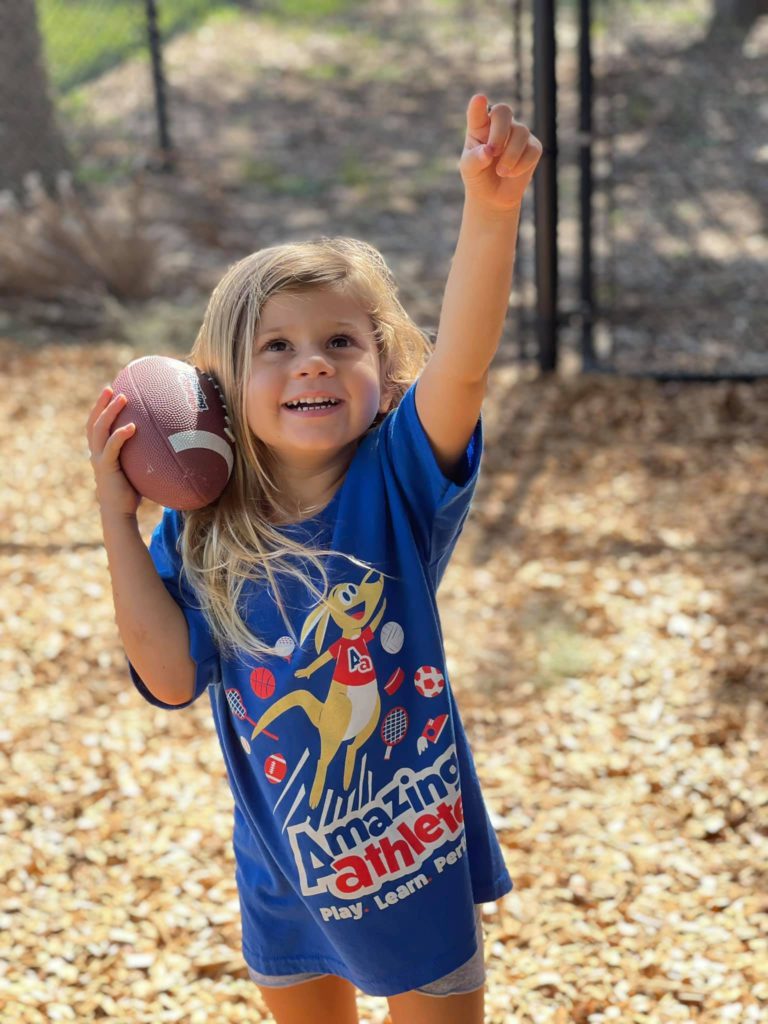
How Preschool Sports Activities Teach Turn-Taking, Listening, and Teamwork
A group of 4-year-olds lines up to kick a ball into a net. One child wants a second turn. Another is watching a butterfly. A third waits with arms crossed. Moments like this look small, yet they hold the earliest lessons in cooperation.
Preschool sports activities give young children a safe, playful setting to practice sharing space, waiting patiently, tuning in to a coach, and working toward a shared goal. Simple teamwork activities for preschoolers can help children practice these skills through movement, repetition, and guided play. Families across Ann Arbor, Milford, Highland, and White Lake often ask where social skills begin. The answer is rarely a worksheet. It is movement, repetition, and guided play.
Why Movement Is the Best Classroom for Social Skills
Young children learn social rules through the body before the mind catches up. A three-year-old may not be able to explain fairness, yet rolling a ball back and forth shows exactly what fairness feels like. This is often called embodied learning, and it is a major reason active play supports social-emotional development so well. Rules are simple, feedback is immediate, and a lesson lands without a lecture when the ball stops rolling because a friend forgot to pass it back.
Turn-Taking: Learning That Waiting Is Part of the Game
Waiting is one of the hardest skills for a preschooler. Impulse control takes practice, and sports offer natural practice every few minutes. Lining up at the goal, passing a beanbag around a circle or waiting for a coach’s signal builds patience in short, manageable doses.
A few coaching habits strengthen the skill:
- Floor spots or cones show each child exactly where to stand.
- Short lines and quick turns match short attention spans.
- Praise for the waiting itself, such as “Nice job giving a friend a turn,” reinforces the behavior, not just the result.
Listening in Motion: Following Directions Without Sitting Still
Listening in a gym differs from listening at a table. Instructions compete with bouncing balls and friends on the move. Games like freeze dance, red light green light, and follow-the-coach drills train auditory attention and working memory together. A child hears a cue, holds the rule in mind, and moves the body to match.
Multi-step directions, such as “run to the cone, grab a beanbag and jump into the hoop,” stretch the skill gradually. That practice carries over to circle time, classroom routines, and bedtime instructions.
Teamwork Activities for Preschoolers That Actually Work
The best teamwork activities for preschoolers share one feature: every child’s contribution matters to reach the goal. These formats work especially well;
- Parachute pop: Children lift a parachute together to bounce soft balls, which only works when the whole group moves in rhythm.
- Bucket brigade: Beanbags travel down a line into a bin, and the group counts the total.
- Buddy obstacle course: Partners carry a pool noodle between them while stepping through cones.
- Shared-goal scoring: The class works together to fill a basket before the music stops, instead of racing against one another.
- Mirror moves: Partners copy each other’s kicks, hops, and throws, building observation and cooperation.
None of these formats creates a winner or a loser. The group succeeds together, and that shared success is what makes cooperation feel rewarding.
Cooperative Play vs. Competition: Why Low Pressure Wins Early
Many parents wonder when to introduce competition. Preschoolers are still building the emotional tools to handle losing, so a non-competitive format keeps the focus on effort, kindness and skill-building. Children who feel safe are more willing to try, stumble, and try again. Scoreboards and rankings can wait until emotional regulation grows stronger in the elementary years.
Big Feelings on the Field: Building Emotional Regulation
Frustration shows up fast in group play. A ball rolls away, a friend takes a spot, or a turn ends sooner than hoped. Each moment is a chance to practice calming breaths, using words, and asking for help. Coaches who name emotions out loud (“That was disappointing, and it is okay to feel that way”) give children a vocabulary for feelings. Over several weeks, tears turn into talking, and grabbing turns into asking.
Multi-Sport Variety Builds Social Flexibility
Moving from kicking to throwing to balancing introduces different social roles: leader, helper, partner, and cheerleader. The Amazing Athletes program for ages 2½ to 6 introduces the fundamentals of multiple sports in a non-competitive setting. Toddlers can begin with Amazing Athletes Tots, a guided, discovery-based class for ages 18 months to 2½. Preschoolers who enjoy structure may thrive in Karate Zoo, where respect, focus, and listening are part of every class. Older children can explore three sports through Sports Discovery.
What to Look For in a Preschool Sports Program
Not every class teaches social skills equally well. Parents can look for a low kid-to-coach ratio, a curriculum that stays consistent year-round, a non-competitive atmosphere, and coaches trained to guide behavior with encouragement. Strong programs also build teamwork activities for preschoolers into every session instead of treating cooperation as an afterthought.
At Amazing Athletes Huron Valley, our coaches introduce the fundamentals of 10 different sports in a fun, educational environment designed around early motor milestones. Preschools and daycares can also bring sessions onsite through school enrichment.
Simple Ways to Reinforce Skills at Home
Practice does not require special equipment. Try these ideas during everyday routines;
- Play a board game that rewards patient turns.
- Roll a ball back and forth with a sibling, counting the passes.
- Build a pillow obstacle course and complete it as a team.
- Challenge the family to keep a balloon in the air for 20 taps.
- Use freeze dance to practice stopping on a signal.
Short, playful sessions of 10 minutes beat long, serious ones. Consistency matters more than perfection.
Conclusion
Turn-taking, listening, and cooperation do not appear overnight, but they grow steadily through playful repetition. Preschool sports activities give young children the right mix of movement, structure, and friendship to practice each skill in real time. Families who add teamwork activities for preschoolers to the weekly routine give a child a head start on kindergarten readiness and lasting friendships.
At Amazing Athletes Huron Valley, we encourage parents to see these skills in action. Find a class near you or book a free class to watch a child take turns, listen closely, and cheer for a teammate.