What Can Children Gain From Summer Sports Programs Beyond Physical Activity?
Summer gives kids a little more room to play, try new things, and spend time outside. For parents, though, it can bring a practical question: how do you keep your child busy without filling the whole break with activities that don’t offer much beyond entertainment?
A kids summer sports camp can do more than give children somewhere to go during the school break. With the right program, they can practice teamwork, build confidence, learn to follow directions and try sports they may not have encountered before.
And those small experiences matter. Young children are still learning how to move their bodies, interact with other kids, and feel comfortable in new situations.
Summer Sports Can Build More Than Athletic Skills
Running, jumping, kicking, and throwing are obvious parts of sports. But watch a group of young children during an activity and you’ll notice something else happening.
One child waits for a turn. Another listens carefully so they know what to do next. Someone misses the ball, laughs, and gives it another try.
That’s learning, too.
For young children, sports can turn simple activities into chances to practice skills they use in everyday life.
Confidence grows through participation
Children don’t have to win to feel successful.
Trying a new activity, getting through an obstacle, catching a ball, or remembering an instruction can give a child a small sense of accomplishment. Do that often enough, and unfamiliar activities may start to feel less intimidating.
This can be especially helpful for children who are cautious around new groups. They get a chance to participate without feeling that every attempt is being judged.
A kids’ summer sports camp can give children that kind of experience. Instead of asking, “Was I the best?” they can start thinking, “Can I try it again?”
Teamwork becomes something children experience
It’s easier to understand teamwork when you’re actually doing it.
Sports give children plenty of chances to take turns, listen to teammates, share space, follow rules, and work together during an activity. They don’t need a complicated team strategy to start learning these habits.
For younger children, simply staying involved and learning to cooperate with others is a good place to start.
Trying different sports encourages discovery
Not every child knows what sport they like. Honestly, how could they?
A child might enjoy kicking a soccer ball one week and discover that they love throwing, running, or balancing just as much. Another child who seems unsure about sports may become interested after finding an activity that feels right.
That’s one reason multi-sport programs can be a good fit for younger children. They get to explore instead of being pushed to pick one sport before they’re ready.
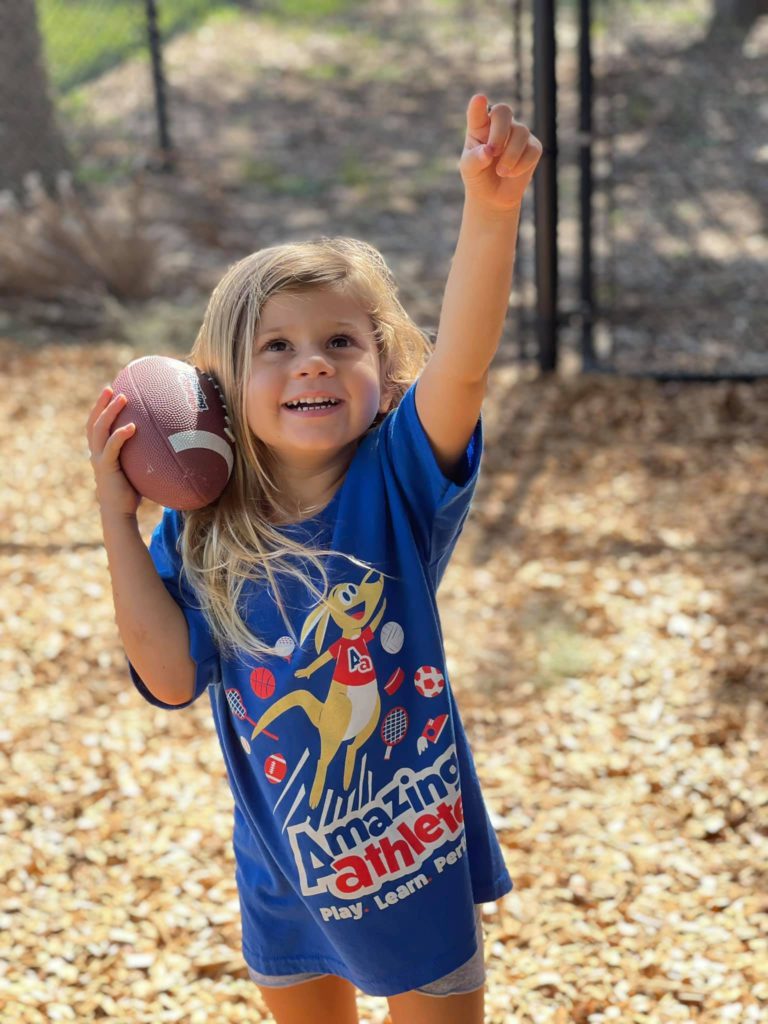
At Amazing Athletes Huron Valley, children are introduced to multiple sports in a fun, educational, non-competitive setting. The curriculum covers fundamentals from 10 sports while giving children opportunities to practice skills such as balancing, running, jumping, throwing, catching and kicking.
What Can Children Practice at a Summer Sports Program?
A good summer program can work on several skills during the same activity-
- Motor skills: Running, jumping, balancing, throwing, catching, and kicking help children practice coordination.
- Listening: Children learn to pay attention, and respond to instructions during activities.
- Patience: Waiting for a turn teaches children that they won’t always go first.
- Confidence: Finishing a new challenge can make a child more comfortable trying something unfamiliar.
- Teamwork: Group activities give children a reason to cooperate and communicate with peers.
- Problem-solving: Movement games can encourage children to decide what to do next.
- Healthy habits: Regular activity can help children become more comfortable with movement as part of their routine.
These skills aren’t limited to sports. Listening can help in the classroom. Patience matters during group activities. Confidence can make it easier to join a new game on the playground.
Why a Non-Competitive Environment Matters
Many parents want their children to enjoy sports without feeling pressure to perform too soon.
The environment makes a difference.
A competitive setting can make some young children focus on being faster or better than someone else. A developmental program can put more attention on learning, participation, encouragement, and individual progress.
For a child who is shy or hesitant, that can change the whole experience.
A kids’ summer sports camp should give children room to make mistakes and try again. Missing a catch isn’t a big deal. Neither is needing another turn to figure something out.
When children aren’t worried about getting everything right, they’re often more willing to participate. That’s a useful habit far beyond sports.
Summer Can Be a Chance to Discover What Your Child Enjoys
Parents don’t always know which activity will click with their child.
Maybe it’s basketball. Maybe it’s running games. Maybe it’s an obstacle course. Sometimes you don’t find out until a child gets the chance to try it.
Multi-sport exposure gives children that chance.
It’s also helpful before they move toward a more specialized team or league. Instead of treating summer as the time to choose one sport, parents can use it as a period of exploration.
Variety can keep children engaged
Doing the same activity over and over isn’t the only way young children learn.
Different games, equipment, movements, and challenges can keep children interested while giving them new ways to practice basic skills. A child might struggle with one activity and then suddenly find a similar movement much easier in another game.
That variety can make a difference.
Our programs bring sports, fitness, and learning together while focusing on motor-development milestones and confidence.
What Makes a Summer Sports Program Worthwhile for Parents?
For parents, keeping a child occupied isn’t the whole point. You want the time to mean something, too.
A good program should be enjoyable for children and make sense for the family. A few things are worth looking for.
Age-appropriate activities
A toddler and an elementary-age child won’t have the same needs. Activities should match children’s abilities, and developmental stages rather than expecting every child to participate in the same way.
A balance of structure and fun
Kids need some structure, but they also need to have fun. Activities that combine clear instructions with room to play can keep children involved without making summer feel like another school day.
Multiple ways to participate
Children arrive with different personalities and skill levels. Some jump right in. Others need a little time.
A supportive program should give beginners a chance to participate without making them feel like they’re behind.
Development beyond sports
Sports can teach more than sports. Look for activities that give children chances to practice listening, teamwork, confidence, patience and movement.
Give Summer More Purpose Without Making It Feel Like School
Summer should still feel like summer. A good sports program can bring some structure to the day while leaving plenty of room for play, and discovery.
Children can try different sports, make friends, move their bodies, and work on new skills without feeling like they’ve been sent back to the classroom.
At Amazing Athletes Huron Valley, we focus on positive, non-competitive experiences that support motor skills, teamwork, confidence, and healthy movement habits. For parents, that can make summer feel like more than a break from school. It becomes a chance for children to find activities they enjoy and get a little more comfortable trying something new.
Conclusion
Summer sports can give children plenty to take away beyond exercise. They can become more comfortable in groups, learn to keep trying when something doesn’t work, and discover that they actually enjoy a sport they hadn’t considered before. A kids’ summer sports camp can give younger children the freedom to explore without asking them to specialize too early.
For parents, that’s a pretty useful combination: an activity children enjoy and an experience that supports their development. The best part may be simple. A child tries something new, has fun, and leaves feeling a little more confident than when they arrived.